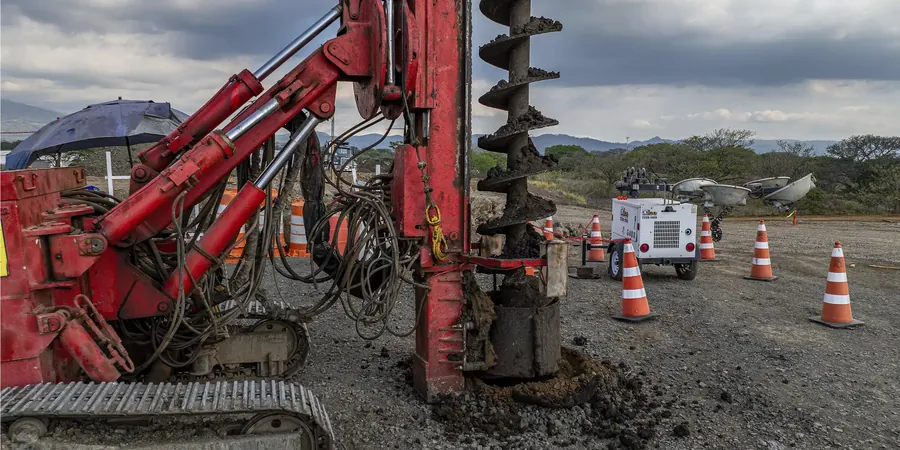
Sandy soils near the Tuolumne River in Modesto behave very differently from the stiff clays found west of Highway 99. Our team has designed stone columns for both settings. The difference in bearing capacity between those two zones can exceed 200 percent. For a warehouse foundation near downtown Modesto, we combined stone column design with a geotechnical instrumentation program to monitor settlement in real time. That project showed us that the alluvial sands respond well to vibro-replacement when the silt content stays below 15 percent.
Stone columns in Modesto cut total settlement by two-thirds on soft alluvial soils when designed with local SPT data.
Methodology and scope
Modesto sits at an elevation of about 90 feet above sea level, with a shallow groundwater table that fluctuates between 8 and 15 feet deep. That high water table makes stone column design particularly effective because the columns act as vertical drains during construction. We follow the Priebe method for bearing capacity and settlement calculations, calibrated with local SPT data. Before installing stone columns, we always run a granulometry analysis to confirm the fines content. Typical parameters from recent projects include:
Technical reference image — Modesto
Local considerations
The most common mistake we see in Modesto is skipping the settlement analysis. Contractors assume stone columns always work the same way. But the alluvial silts near the airport have a high compressibility index. If you design the column spacing based on a generic chart without running a consolidation test, you end up with uneven settlement under the slab. We documented a case on Carpenter Road where the differential settlement reached 4 inches within the first year. That required slab jacking and a second ground improvement program.
Full design of stone column patterns using vibro-replacement. Includes bearing capacity, settlement, and liquefaction mitigation for sites with shallow groundwater.
02
Load Testing & Verification
In-situ plate load tests on trial columns to verify design assumptions. We measure modulus of subgrade reaction and column stiffness before full production.
03
Liquefaction Mitigation Analysis
Cyclic stress ratio calculations per NCEER criteria to determine column spacing and replacement ratio for seismic sites in Modesto.
Depth depends on the liquefiable layer thickness. In Modesto, we typically extend columns through the soft alluvium down to the stiff clay at 25 to 40 feet. A site investigation with SPT and CPT is required to confirm the depth.
What is the typical cost range for stone column design and installation in Modesto?
The cost ranges between US$1,610 and US$5,400 per column, depending on depth, diameter, and access conditions. This includes design, material, and installation. A full project estimate requires a site visit and soil data.
Can stone columns handle the seismic loads in Modesto?
Yes. Stone columns improve the soil's shear strength and reduce the risk of liquefaction. We design per ASCE 7-22 Site Class D or E criteria, using the cyclic stress ratio approach from the NCEER workshop (Youd & Idriss, 2001). The columns also act as drains, dissipating excess pore pressure during an earthquake.
How long does the stone column design process take?
The design phase takes 2 to 4 weeks after receiving soil borings. We run settlement and bearing capacity analyses, produce column layout drawings, and specify the aggregate gradation. Installation then takes 3 to 8 weeks depending on the site area and column count.