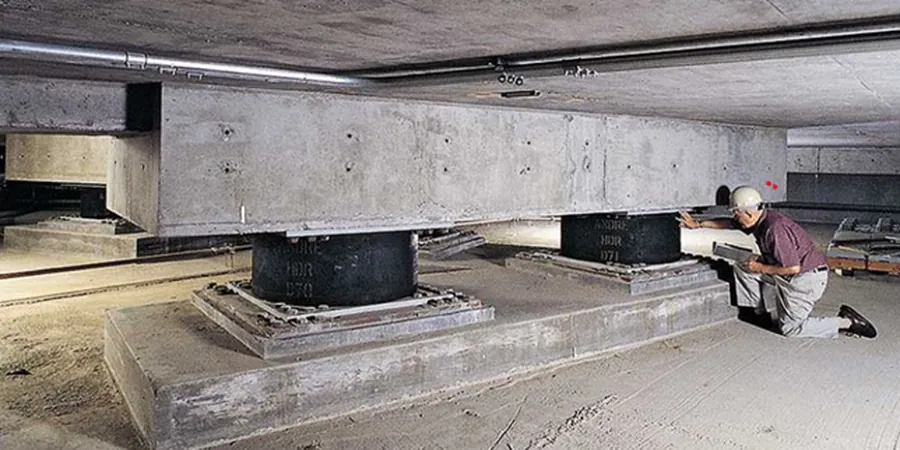
The contrast between Modesto’s older downtown blocks, where shallow foundations rest on dense older alluvium, and the newer subdivisions expanding toward the Tuolumne River floodplain—where soft, saturated silts and clays dominate—is a clear reminder that no single foundation solution fits this city. In Modesto, the subsurface variability demands a site-specific approach to seismic foundation design, one that accounts for soil stiffness, groundwater depth, and the amplification potential of the sedimentary basin. For low-rise residential work, conventional spread footings may suffice on firmer ground, but as soon as you encounter the Holocene deposits near the river corridors, a deeper analysis involving pile foundations becomes essential to transfer loads through the weaker upper layers. Our team evaluates each property’s unique conditions before recommending a foundation strategy that aligns with the local building code and the actual soil behavior under cyclic loading.
The thick alluvial sequence beneath Modesto can amplify distant seismic waves, making Vs30 characterization a critical input for foundation design.
Methodology and scope
Modesto sits at an elevation of about 89 feet above sea level within the Great Valley geomorphic province, where the underlying geology consists of Quaternary alluvial fans and floodplain deposits reaching depths of several hundred feet. This thick sedimentary sequence can amplify seismic waves from distant earthquakes—such as those originating on the San Andreas or Hayward faults—making seismic foundation design particularly sensitive to the shear-wave velocity profile of the upper 100 feet. To characterize these conditions, we combine cone penetration testing with downhole seismic surveys to determine the average Vs30, which directly feeds into the site class definition per ASCE 7-22. The table below summarizes key parameters we evaluate for every project in Modesto.
Technical reference image — Modesto
Local considerations
One of the most common oversights we see among local builders is assuming that the dense gravelly sands encountered at 6 to 8 feet downtown are representative of the entire city. In Modesto, that assumption can be costly. On the south and east sides, where younger alluvium dominates, the same shallow foundation may experience excessive settlement or even bearing failure during a moderate seismic event. We have also observed cases where liquefaction-induced lateral spreading went unaddressed because the geotechnical report did not include cyclic triaxial testing or CPT-based liquefaction assessment. Proper seismic foundation design in these areas must incorporate both the static and dynamic response of the soil column, not just the static bearing capacity.
Spread footings or mat slabs (firm); piles (soft zones)
Associated technical services
01
Site-Specific Seismic Hazard and Response Analysis
Using probabilistic seismic hazard analysis (PSHA) and site response modeling with programs like DeepSoil or Strata, we develop acceleration time histories and response spectra that reflect Modesto’s basin effects. This includes evaluating liquefaction triggering and post-liquefaction settlement for shallow foundations.
02
Foundation System Design and Verification
From shallow mat slabs on improved ground to driven piles or drilled shafts through soft layers, we design foundation systems that meet the performance criteria of ASCE 7 and IBC. Our work includes structural load take-downs, reinforcement detailing, and construction-phase quality control testing.
Applicable standards
ASCE 7-22 (Minimum Design Loads and Associated Criteria for Buildings), IBC 2021 (International Building Code, Chapter 18), ASTM D1586-18 (Standard Test Method for Standard Penetration Test), ASTM D2487-17 (Standard Practice for Classification of Soils for Engineering Purposes), NEHRP Recommended Seismic Provisions (FEMA P-1050)
Frequently asked questions
What is the difference between Site Class C and Site Class D for foundation design in Modesto?
Site Class C corresponds to very dense soil or soft rock with average Vs30 between 1,200 and 2,500 ft/s, while Site Class D covers stiff to very stiff soils with Vs30 between 600 and 1,200 ft/s. In Modesto, the deeper alluvial deposits often place sites in Class D, which amplifies spectral accelerations more than Class C. This directly affects the design base shear and can push a project toward deeper foundations or ground improvement.
How much does a seismic foundation design study cost in Modesto?
For a typical single-family or small commercial project, the cost ranges from US$1,100 to US$4,250, depending on the number of borings, laboratory tests, and the complexity of the site response analysis. Larger developments with multiple structures or high liquefaction potential will be at the upper end. Contact us for a quote tailored to your specific lot and building type.
Is liquefaction a real risk for new construction in Modesto?
Yes, particularly in areas underlain by Holocene silty sands and silts with shallow groundwater. The 1989 Loma Prieta earthquake caused liquefaction in similar deposits along the San Joaquin River. Our assessment follows Youd-Idriss (2001) and NCEER methods, using CPT and SPT data to quantify the factor of safety against triggering. When the factor is below 1.0, we recommend ground improvement, deep foundations, or mat slabs designed to span potential void zones.
What building code governs seismic foundation design in Modesto?
The California Building Code (CBC), which adopts the IBC with state-specific amendments, is enforced in Modesto. ASCE 7-22 provides the seismic load criteria, including site class determination, spectral response accelerations, and design response spectra. Our reports reference the most current edition of these codes to ensure permit approval by Stanislaus County building officials.