The semi-arid climate of Modesto, with its hot, dry summers and episodic winter rains, creates conditions where certain alluvial soils can undergo sudden volume loss when wetted under load. This phenomenon, known as hydro-consolidation or soil collapse, is a hidden threat for slab-on-grade foundations and buried utilities in the Central Valley. When a dry, low-density soil matrix is inundated — whether by a broken irrigation line, a rising water table, or heavy seasonal rainfall — its internal structure can break down without warning. That is why a thorough collapsible soil evaluation in Modesto is not a bureaucratic step but a structural necessity. Before pouring concrete, we recommend coupling this assessment with a georradar survey to detect buried anomalies, and a soil classification to confirm the material's susceptibility to collapse.
A soil that appears stable when dry can lose 10% or more of its volume within hours of wetting under load. This is not a settlement, it is a collapse.
Methodology and scope
A common mistake among builders in Stanislaus County is assuming that a standard bearing-capacity test is enough to rule out collapse potential. That approach misses the key variable: the soil's response to wetting. Our evaluation protocol for Modesto starts with undisturbed block samples taken from test pits at foundation depth, followed by double-oedometer or single-oedometer collapse tests in the laboratory. We measure the collapse potential index under a seating load of 200 psf and compare it to the overburden plus structural stress. When collapse indices exceed 1-2%, ground improvement or deep foundations should be considered. The evaluation also includes a field moisture content and dry density profile to determine whether the natural water content is below the optimum for collapse initiation. If the site has been irrigated historically, the risk is lower, but a fresh cut-and-fill lot with low relative compaction is a classic candidate for collapse.
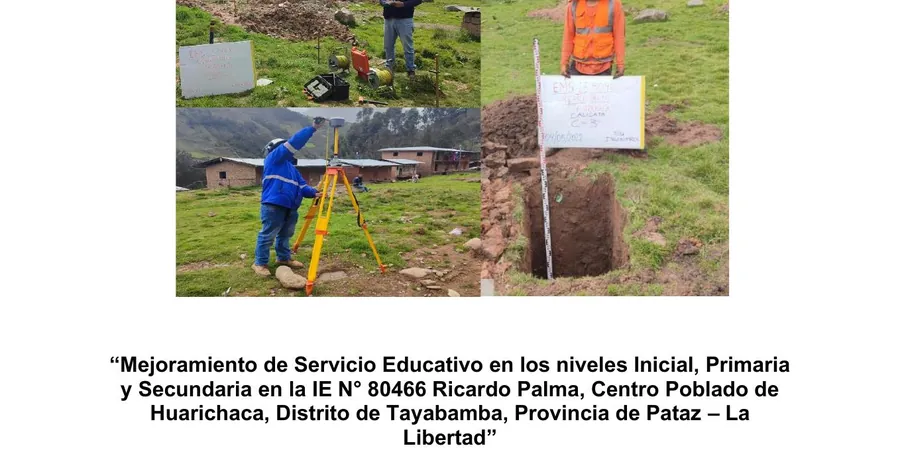
Technical reference image — Modesto
Local considerations
The primary risk in Modesto is not seismic shaking but a slow, silent wetting event. A homeowner waters a new lawn, a storm drain leaks, or a seasonal creek rises after a wet winter — and within days the foundation drops several inches, cracking slabs, misaligning doors, and breaking utility connections. The damage is often irreparable without underpinning. Because the collapse mechanism is triggered by water, the evaluation must simulate the worst-case wetting scenario using a controlled inundation test. We use consolidation rings with porous stones to allow free water entry, replicating the field condition where water percolates downward through the soil profile. Ignoring this risk means accepting a differential settlement that can exceed 1.5 inches in a 20-foot span.
A preliminary assessment using test pits to 10-15 feet, undisturbed sampling, and collapse index testing on 3-5 specimens per pit. Includes a qualitative assessment of soil structure and a written report with collapse potential classification per ASTM D5333. Suitable for single-family homes and small commercial pads in Modesto.
02
Phase II — Advanced Laboratory & Foundation Recommendations
Full double-oedometer collapse testing on undisturbed samples, supplemented by consolidation-swell testing and triaxial shear under saturated conditions. We provide specific ground improvement recommendations — pre-wetting, dynamic compaction, or deep foundations — based on the collapse profile and design loads. Ideal for multi-story buildings and sensitive infrastructure in the Central Valley.
Applicable standards
ASTM D5333-03 (Standard Test Method for Measurement of Collapse Potential of Soils), ASTM D4546-14 (One-Dimensional Swell or Collapse of Soils), IBC 2021 Section 1803.5.3 (Expansive or Collapsible Soils — requires geotechnical investigation), ASCE 7-22 Chapter 12 (Seismic considerations do not replace collapse evaluation)
Frequently asked questions
How does Modesto's alluvial soil differ from other collapsible soils in California?
Modesto's soil is derived from Sierra Nevada granitic alluvium deposited by the Tuolumne and Stanislaus rivers. It tends to be silty sand (SM) or low-plasticity silt (ML) with a loose, honeycomb structure. Unlike the highly expansive clays of the Bay Area or the residual soils of the Coast Ranges, Modesto's collapsible soils lose volume primarily upon wetting, not upon drying. This makes the collapse index under inundation the critical parameter, not the swell index.
What is the typical cost range for a collapsible soil evaluation in Modesto?
For a standard residential site with two test pits and three collapse tests, the cost ranges between US$790 and US$2.780 depending on the number of samples and whether advanced double-oedometer testing is required. For larger commercial projects requiring five or more tests plus consolidation analysis, the cost can reach the upper end of that range. We provide a fixed-price quote after reviewing the site plan and geotechnical context.
Can I build on a lot with collapsible soil without expensive ground improvement?
In some cases, yes. If the collapse potential index is below 1% and the foundation loads are light (e.g., a single-story wood-frame house), a thickened edge slab with moisture barriers and flexible utility connections may be sufficient. However, if the collapse index exceeds 2%, we typically recommend pre-wetting the soil to its optimum moisture content and re-compacting the upper 3 to 5 feet. For severe cases, deep foundations such as concrete piers are the only reliable solution.
How long does the evaluation take from field work to final report?
Field work in Modesto usually takes one to two days for test pits and sampling. Laboratory testing, including the double-oedometer collapse tests which require 5 to 7 days for full saturation and loading stages, extends the timeline. You can expect a complete report with recommendations within 10 to 14 business days from the start of fieldwork. Expedited service is available for an additional fee.