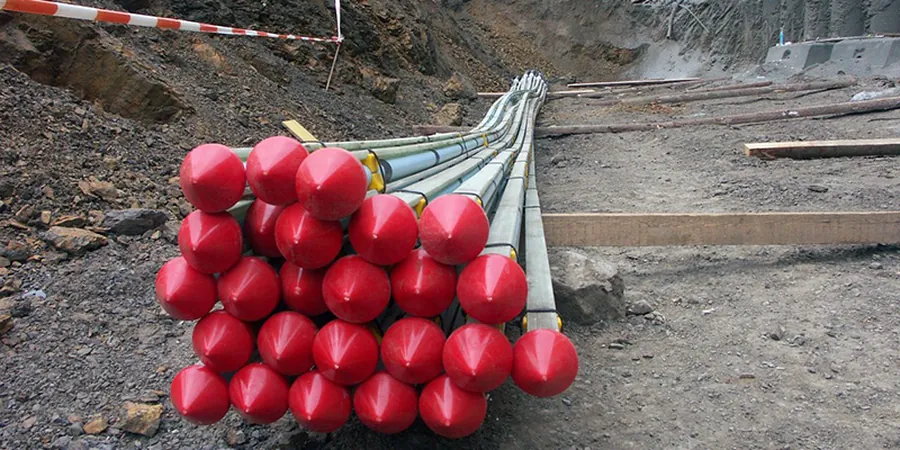
Modesto lies on deep alluvial deposits of the Tuolumne River, where interbedded sands, silts, and clays create variable ground conditions for anchor systems. We follow ASCE 7 seismic provisions and IBC Chapter 18 to design active anchors that pre-stress the tendon and passive anchors that mobilize resistance only after movement occurs. For a project in Modesto, knowing the soil profile is critical: loose sands near the surface can reduce bond capacity, while stiff clays at depth provide better skin friction. That is why we always correlate anchor design with site-specific SPT data and a detailed geotechnical instrumentation plan to verify load transfer in real time.
In Modesto's alluvial soils, the bond zone length for a 150-kip active anchor typically ranges from 15 to 25 feet, depending on the fines content and groundwater level.
Methodology and scope
In Modesto, we often see that the shallow water table—typically 10 to 20 feet below grade—dictates the choice between active and passive anchors. Active anchors require a corrosion-protected tendon and a bonded length that stays above the phreatic surface; passive anchors, such as soil nails or tiebacks, can be installed more quickly but need careful drainage. Our team sizes the bond length using the FHWA methodology for drilled-and-grouted anchors, then cross-checks against the pullout resistance from our own field testing. Before finalizing the design, we run a screw driving sounding to capture continuous soil stiffness along the anchor zone, which directly informs the load–deformation curve for both active and passive systems.
Technical reference image — Modesto
Local considerations
Modesto sits in Seismic Design Category D (ASCE 7-16), with peak ground accelerations of 0.45g for the 2%-in-50-year event. Loose, saturated sands in the upper 30 feet are prone to liquefaction, which can reduce anchor capacity to near zero during shaking. For active anchors, the pre-stress force may drop if the ground liquefies and the tendon loses bond. We mitigate this by extending the bond zone into dense sands or stiff clays below the liquefiable layer, and by specifying corrosion-resistant materials that survive post-event exposure. A site-specific liquefaction assessment is mandatory for any permanent anchor design in Modesto.
2.0 for proof load; 1.5 for working load (IBC 2018)
Minimum Edge Distance
6 ft (active); 4 ft (passive) per FHWA guidelines
Associated technical services
01
Active Anchor Design (Tiebacks & Ground Anchors)
We design pre-stressed tiebacks for retaining walls, bridge abutments, and excavation support. Each design includes bond zone length, tendon size, lock-off load, and corrosion protection. We verify capacity with a proof test per ASTM D1143.
02
Passive Anchor Design (Soil Nails & Helical Anchors)
For slopes, MSE walls, and below-grade structures, we design passive anchors that yield only after the ground moves. We calculate nail spacing, grout volume, and pullout resistance using local soil parameters. Helical anchors are sized for uplift and lateral loads.
What is the difference between active and passive anchors?
Active anchors are pre-stressed after installation, applying a permanent compression force to the ground. Passive anchors (soil nails, helical piles) are not pre-stressed; they resist movement only after the ground begins to deform. Active anchors are used where immediate support is needed; passive anchors work well in slopes and temporary excavations.
How do Modesto's soil conditions affect anchor bond length?
Modesto's alluvial soils vary widely: loose sands near the surface require longer bond zones (20–30 ft) to achieve 100-kip capacity, while stiff clays at 40 ft depth can achieve the same capacity with 15 ft of bond. Groundwater also reduces bond stress in silt layers. We always run a site investigation before sizing the anchor.
What testing is required for permanent anchors in Modesto?
Per IBC 2018, permanent anchors must pass a proof test to 133% of the design load and a creep test over 60 minutes. We also perform a sacrificial test anchor at the site to verify bond stress before production. All testing follows ASTM D1143 and ASTM D3689.
How much does an anchor design study cost in Modesto?
The cost for a full anchor design (including field investigation, bond zone calculation, and testing plan) typically ranges from US$910 to US$3,260, depending on the number of anchors, site accessibility, and the required seismic analysis. A preliminary desktop study for a single wall may start around $910.
Can anchors be installed in high groundwater conditions?
Yes, but special measures are needed. For active anchors, we specify a corrosion-protected tendon and a watertight grout mix. For passive soil nails, we install a drainage system behind the wall to prevent hydrostatic pressure buildup. In Modesto, where the water table is shallow, we also check for liquefaction during the design life.